Cost Guide — Drainage
What a French drain costs
and when you need one
A French drain is a pipe in a gravel trench that gives groundwater somewhere to go. Whether you need one, how long it has to be, and where it can discharge decide the price — and the last of those is the one that catches people out.
Start Here
Do you actually need one?
Not every wet yard needs a French drain. Water sitting on the surface after rain is often a grading problem, and regrading so the ground falls away from the house is cheaper and less disruptive. A French drain is for water that is already in the ground — a corner that stays soft for weeks, a slope that seeps, a crawl space that smells damp in February.
We will tell you which one you have. If regrading solves it we will say so, because selling you a drain you do not need is a good way to never get a referral.
What Moves The Number
What decides
the price
Length matters less than most people expect. Where the water is allowed to go matters more.
Where it discharges
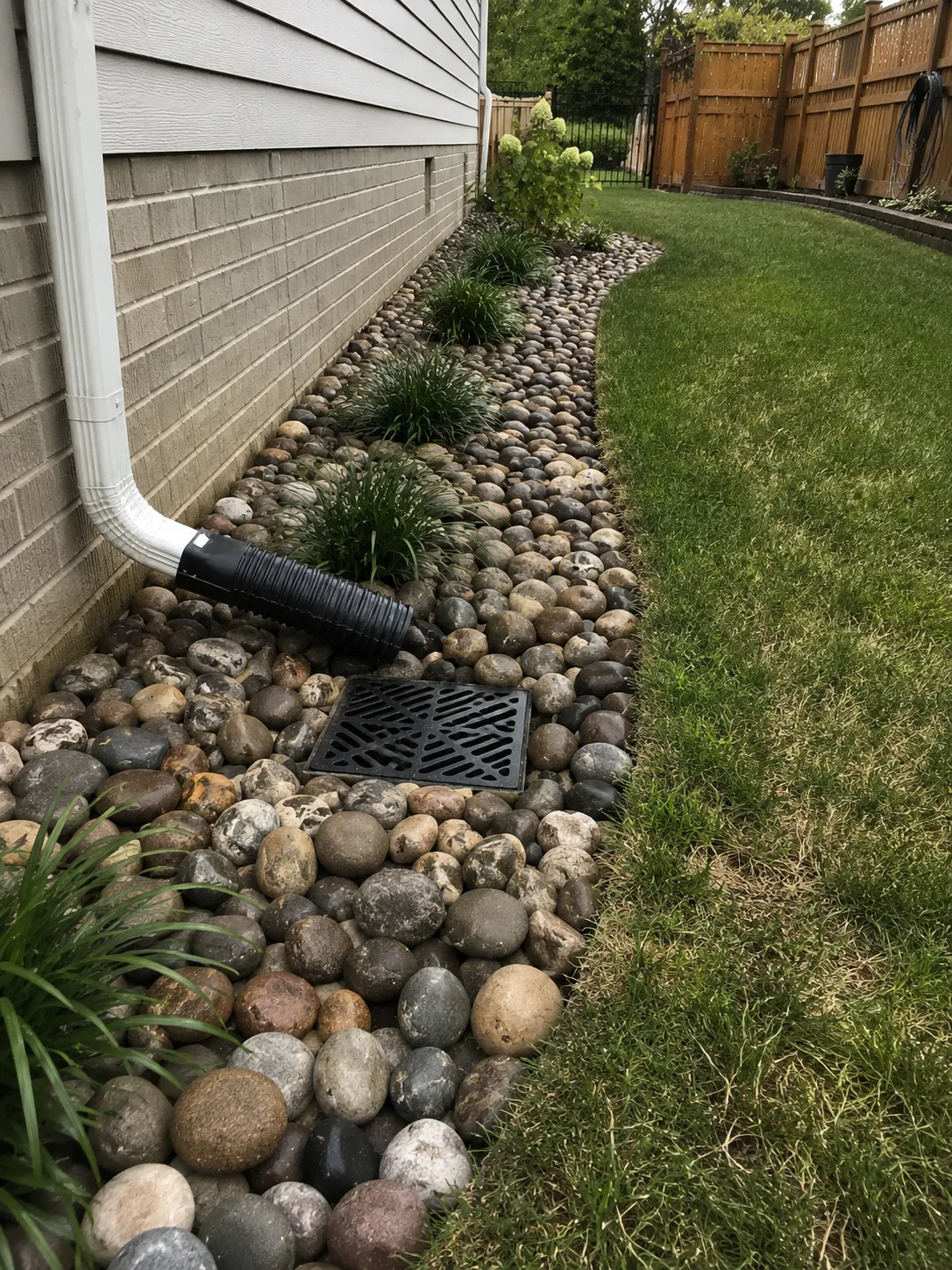
This is the question that decides everything. A drain has to end somewhere legitimate — daylight on a slope, a storm connection, a dry well sized for your soil. On a flat lot with nowhere obvious, a dry well or a pump becomes part of the job and the price moves accordingly.
How deep it has to go
Depth is driven by what you are intercepting. A surface problem is a shallow trench; groundwater against a foundation is deeper, and deeper means more excavation, more spoil to haul and sometimes shoring.
What the trench runs through
Open lawn is straightforward. A trench that has to cross a driveway, pass a mature tree’s root zone, or thread between utilities is slower and occasionally has to change route entirely.
Soil
Contra Costa clay drains slowly, which is why the problems exist here in the first place. It also means a dry well has to be larger than it would be in sandier ground to hold the same volume. Soil is why the same drain costs differently in Concord and in Oakley.
Reinstatement
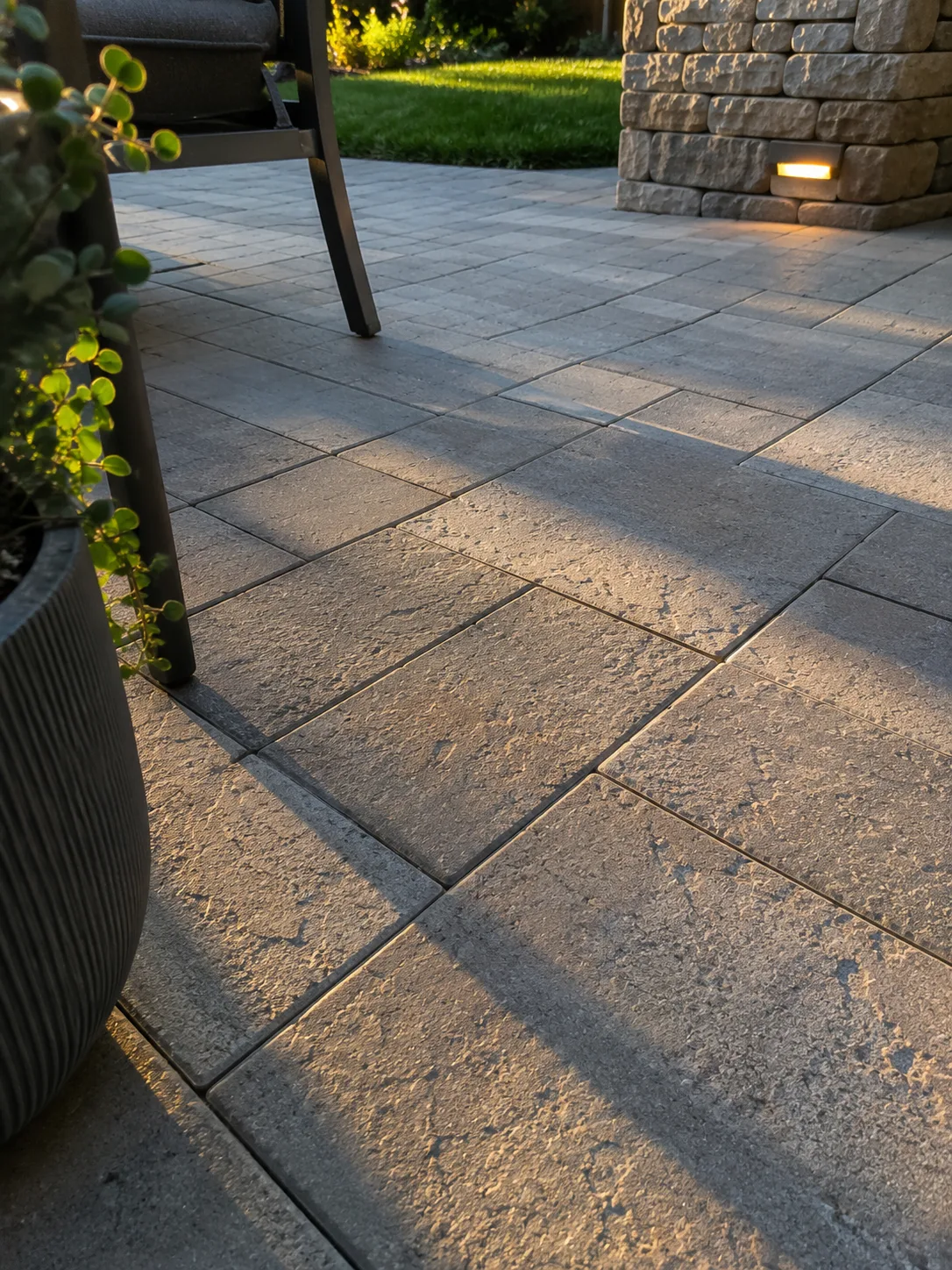
Putting the yard back is part of the price. A trench across a lawn is turf; a trench across a patio is lifting and relaying hardscape, which is sometimes more than the drain itself.
What a drain that lasts includes
The parts you cannot see later
- Perforated pipe laid to a consistent fall, not just laid flat
- Clean drain rock, not site spoil
- Filter fabric wrapping the rock so silt cannot migrate in
- An outlet that is legal and that will still work in ten years
- Clean-outs where the run is long or turns
- Reinstatement of whatever the trench went through
FAQ
Common questions
Have a question we haven’t answered? Call or send a message — we respond within 24 hours.
Contact UsIf water sits on the surface and dries in a day or two, it is usually grading. If the ground stays soft for weeks, if a slope seeps, or if the problem is against the foundation, it is usually groundwater and a drain is the right tool. We will tell you which at the site visit, free, including when the answer is the cheaper one.
Almost always silt. Rock without filter fabric fills with fine soil over a few winters and the trench stops draining, at which point it is doing nothing and you cannot see that it has stopped. The other common failure is an outlet that was never going to work — a pipe that runs downhill into nothing, or into a neighbour’s yard.
You can, and it will work for a while. Whether it is still working in five years comes down to fall, fabric and where the water ends up, and those are the parts that are tedious rather than difficult. If the problem is cosmetic, DIY is reasonable. If it is against your foundation, it is not the place to learn.
Usually not for the drain itself, but where the water discharges can involve the city, and work near a creek or levee can involve more than that. We establish what applies to your parcel before designing rather than afterwards.
Often, if the water is arriving from outside, which it usually is. Sometimes the answer also involves grading or gutter discharge. We would rather diagnose it properly than sell you one solution and leave the cause in place.
Most residential runs are days rather than weeks, with reinstatement adding to that. You get a written schedule with the written price.